The Cancer Dog hovers. They check on everyone, cook for everyone, and worry about everyone while neglecting themselves entirely.
the Watchful Heart
The Cancer Dog
The guardian of home - double devotion creating the zodiac's most nurturing protector.
Curious if you’re more than just a Cancer Dog?
Essence
Devotion Squared
The Cancer Dog is devotion squared. Both signs are fiercely loyal, deeply nurturing, and built around the concept of protecting loved ones. Together they create someone whose entire life revolves around caring for their pack with an intensity that is both beautiful and occasionally suffocating.
The Cancer Dog protects with double intensity. Cancer's family instinct meets Dog's loyalty, and the result is a person whose center of gravity is permanently fixed on the people they love. They build the home, defend the home, maintain the home, and at the worst end, refuse to allow anything from outside the home to enter unsupervised. The risk is the fortress that was built to keep the family safe becoming the fortress that keeps the family from ever fully growing up. The Cancer Dog must learn the difference between a home that protects and a home that controls, and the difference is sometimes only visible in retrospect.
Western Cancer Window
Jun 21 – Jul 22
Recent Dog Years
1982 · 1994 · 2006 · 2018 · 2030
Attributes
Water
/
Earth
·Yang
·Cardinal
·Moon-Ruled
·Third Trine
East Meets West
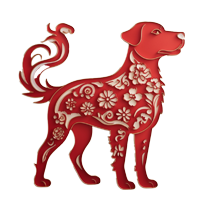 Dog (Eastern)
| Element | Earth |
| Polarity | Yang |
| Trine | Third |
| Season | Late Autumn |
| Traits | Loyal, Honest, Amiable |
♋ Cancer (Western)
| Element | Water |
| Modality | Cardinal |
| Ruling Planet | Moon |
| Dates | Jun 21 – Jul 22 |
| Traits | Nurturing, Intuitive, Protective, Sensitive |
Cancer Dog Personality Map
Your Dog side – loyal, honest, amiable – is your core temperament, the instincts and patterns you were born with. Your Cancer side – nurturing, intuitive, protective – is how you engage the world, the way you think and express yourself. The map below shows the Cancer Dog personality that emerges when both systems live in the same person.
Cancer Dog Blended Map
Character
The Devoted Guardian
The Cancer Dog is double loyalty. Both signs are deeply emotional, home-oriented, and protective, doubling down on devotion to family. Together they produce someone whose dedication to inner circle is total, whose home is a sanctuary, and whose response to threats against their people is immediate. The personality that emerges is the family guardian, the figure whose love is unconditional and whose protection is unconditional too.
Strengths
- Unmatched family devotion
- Intuitive caregiving
- Protective loyalty
- Emotional reliability
- Ability to create the safest home environment imaginable
Weaknesses
- Overprotective to the point of control
- Anxiety about family safety that never stops
- Difficulty letting anyone outside the inner circle in
- Martyring themselves for their pack
Warm within their circle, cautious outside it. Their hospitality is legendary for people who have been granted access.
Love & Relationships
The Cancer Dog in Love
They love through care and consistency, with a depth of devotion that turns the relationship into a sanctuary. The partner who is loved by a Cancer Dog will not be casually loved again.
Threats to family stability. Casual treatment of the people they love.
The Cancer Dog protects the inner circle without negotiation. The partner who speaks dismissively of the Cancer Dog's family, who undermines their relationships with siblings or parents, or who treats long-running friendships as competition for attention has already crossed a line that does not get uncrossed. The Cancer Dog will not always confront this directly. They will sometimes simply begin building the relationship that excludes the partner from the inner circle they thought they were joining.
The deeper red flag is the partner who is unstable in the foundational ways. Inconsistent presence. Unpredictable mood. The kind of partner who makes the home feel uncertain. The Cancer Dog can survive almost any external difficulty if the home is steady, and almost no external comfort if the home is not. A partner who introduces volatility into the family system is, however charming, the wrong fit for the long haul.
The home is the deal. The partner is either steady inside it or they are not the partner.Family-oriented. Reciprocates the care. Notices the work.
The right partner for the Cancer Dog is someone who treats family as a foundational category rather than an obligation. They make the calls. They remember the birthdays. They are present at the gatherings. They do not have to be the most family-oriented person in the world, but they have to share enough of the value that the Cancer Dog does not feel like the only person doing the emotional infrastructure for the relationship.
Reciprocity is the other essential. The Cancer Dog gives without keeping score, but they notice, eventually, when the giving is unidirectional. A partner who receives the care indefinitely without returning it in kind will discover that the Cancer Dog has not stopped giving, exactly, but has stopped doing it warmly. The motions continue. The actual love has quietly moved somewhere else.
The care has to flow both ways. Otherwise it slowly drains in one.Devoted. Nurturing. Permanently committed.
The Cancer Dog romances by making the home a refuge. The shared meal is sacred. The bedroom is sacred. The Sunday morning routine is sacred. They do not romance through novelty; they romance through the slow, careful construction of a private world that contains only the two of them, and then, perhaps, the children, and then perhaps a tightly held circle of intimates who have earned access.
The expressed devotion is physical and continuous: the bed turned down, the favorite tea on the nightstand, the small worry remembered weeks later and quietly addressed. The Cancer Dog does not make announcements about love. They make hot soup when the partner is sick. The cumulative effect, across years, is a kind of intimacy that most relationships in the world do not produce, because most people do not have the patience the Cancer Dog brings to it.
The home is the love letter. It just keeps being delivered, every day.Reciprocal devotion. Appreciation for the tireless care.
What the Cancer Dog needs is to feel that the care has been seen. Not thanked in the formal sense; that feels transactional. Seen, in the sense that the partner knows what is being given and does not take it for granted. The Cancer Dog can sustain extraordinary effort if they trust that the effort is registered. The Cancer Dog cannot sustain the same effort if they suspect it has become invisible labor that has been folded into the partner's baseline expectations.
What they need least is the partner who treats them as the family operating system. The Cancer Dog will run that operating system because the function is genuinely needed and they are good at it, but they need the partner to actively participate in the household, the relationships, the emotional weather. A partner who outsources all of it to the Cancer Dog will, over years, find themselves living with a person who has slowly stopped offering anything beyond logistics.
The work is real. It needs a partner, not a passenger.
Career & Money
The Cancer Dog at Work
How They Show Up
Caring. Loyal. The colleague who notices the new hire is struggling.
The Cancer Dog at work treats the team as a small family. They remember birthdays. They notice when someone has been quiet for too many days. They know which colleague is going through a divorce and adjust the workload without making it a thing. The team that has a Cancer Dog in it functions better, partly because of the practical work and partly because of the emotional infrastructure they quietly maintain in the background.
The risk inside an organization is the assumption that the emotional labor is free. The Cancer Dog will not bill for it; in fact they will refuse to acknowledge it as labor at all. But the labor is real, and a workplace that takes it for granted will eventually lose the Cancer Dog or, worse, keep them in a state of slow depletion. The Cancer Dog who excels professionally is the one who learns to name the work, even when the naming feels self-promotional, because invisible labor is the easiest labor to lose.
The team is the family. The labor has to be visible to be sustained.How They Lead
The family leader. Teams feel protected and cared for.
Cancer Dog leadership runs on a particular kind of warmth that is not always recognized as leadership until you compare it to its absence. They know each team member individually. They defend the team in budget conversations the team will never see. They absorb organizational hostility on the team's behalf and do not pass the cost down. The team that has a Cancer Dog leader knows they are protected, and the protection is genuinely felt, not just claimed.
The risk is the difficulty of holding accountability for the people they have folded into the family. The Cancer Dog struggles to fire the colleague who has stopped performing, to give the hard performance review to the team member they personally like, to escalate the issue with the underperformer who they know is going through a hard year. The growth work is recognizing that protection sometimes means having the difficult conversation, not avoiding it. The team that is shielded from honest feedback is not actually being protected.
Protection includes the hard truths. Especially those.How They Handle Money
Family-security focused. Every dollar serves the pack.
The Cancer Dog's relationship with money is structured around the family's long-term safety. They save. They overinsure. They build the emergency fund and keep building it past the point of statistical necessity. They make career choices that prioritize stability over upside. They are usually the most financially disciplined person in any household they are part of, and the household benefits accordingly.
The risk is the sacrifice that becomes habit. The Cancer Dog can spend decades doing without things that they could afford, because the doing-without became the practice. The vacation that was always postponed. The career change that was too risky for the family. The growth work is recognizing that the family security has been delivered, that the household is not in danger, and that some of the savings can now be deployed in service of the life they were saving for in the first place.
The security was the goal. It is allowed to be reached.
Growth Edges
Where the Cancer Dog Grows
The Cancer Dog's protective devotion is their gift and their cage. Used in service of building a sanctuary, it produces the safest, warmest homes in the zodiac. Held too tight, it becomes a fortress that no one inside can quite grow up in, and no one outside can quite be admitted to. The walls were built for safety. The work is making sure the door still opens.
The Cancer Dog protects with the assumption that protection is what is wanted. The teenager is protected from disappointment by interventions the teenager did not ask for. The spouse is protected from difficult news that they probably should have heard about. The adult child is protected from consequences that would have taught them what they needed to learn. The protection is genuine. The cost is real.
The growth work is recognizing that some of the protection is for the protector, not the protected. The Cancer Dog cannot bear watching their people struggle, so they intervene; in intervening, they prevent the people from developing the muscle that comes from struggling. The harder, more loving move is the willingness to watch the difficulty without rescuing from it, because the rescue is sometimes the harm.
Some protection is care. Some is just the protector unable to watch.The Cancer Dog's inner circle is small by design. The protection is intense because the circle is tight; the tighter the circle, the more intense the protection can be. This works at small scale. The household, the immediate family, the two or three closest friends. The Cancer Dog can deliver a quality of care to this group that almost no one else in the zodiac can match.
But the closed circle has a cost the Cancer Dog does not always count: the slow narrowing of the world. New people are evaluated and usually found wanting; the existing family is so present that new connections require more energy than the Cancer Dog has to spare. Across decades, this becomes its own kind of isolation, in which the Cancer Dog is surrounded by intimates and meets almost no one else. The growth work is the occasional, deliberate opening: the new friendship pursued, the unfamiliar context attended, the willingness to let the circle expand even when the existing circle is already enough.
The tight circle is a gift. So is letting it occasionally grow.The Cancer Dog will work themselves into the ground for the family without complaint. They will skip the doctor's appointment to drive the kid to soccer. They will postpone the hobby for the third year running because the household needed them. They will neglect the friendship that mattered to them for the relative who needed help. The sacrifices are real and they are visible only to the Cancer Dog, because no one else is keeping the running tally.
Then comes the resentment, and the resentment is the surprise. The Cancer Dog did not see themselves as a person who would resent their family for receiving what was freely given. But the body keeps the score even when the heart insists it does not. The growth work is the unglamorous one: the self-care that gets put on the calendar with the same priority as the family obligations, because a depleted Cancer Dog eventually delivers a degraded version of the love everyone was counting on.
The body keeps the score. Even when the heart insists it does not.At the worst end of this combination is the version where the home stops being a refuge and starts being a containment system. The protection that was supposed to make the family safe has become the framework that keeps the family from growing into independent lives. The children do not move out, or they move out and feel guilty. The spouse cannot make a decision without consulting the Cancer Dog first. The home is beautifully maintained and faintly suffocating.
This is the Cancer Dog's hardest growth edge because the original instinct was loving. The walls were built for safety; they are now also the walls. The growth work is the slow, sometimes painful loosening: the trust extended to family members to make their own mistakes, the home that operates as a base rather than a control center, the protection that recognizes its own limits. The family was supposed to be safe. They were also supposed to be free.
The walls were built for safety. The door also has to open.Famous Cancer Dogs
Real people born under both Cancer and the Year of the Dog.
Tom Hanks
1956
Cancer warmth and Dog reliable decency in a career built on trust
Princess Diana
1961
Cancer maternal devotion and Dog fierce advocacy for the vulnerable
Robin Williams
1951
Cancer emotional depth and Dog loyal generosity that touched everyone who knew him
Fun Facts
The Cancer Dog is the combination most likely to adopt a pet during a difficult time because their nurturing instinct demands an outlet
Moon nurturing and Dog loyalty create the 'ultimate parent' archetype
This combination produces an extraordinary number of people in pediatric care, social work, and family services
Cancer Dogs are the combination most likely to organize the family reunion and quietly arrange the logistics so nobody else has to think about them.
Their love language is anticipatory care - the meal you did not realize you needed, the call at the moment you would have called them.
Cross-System Guide
Wait, how do I have both signs?
The short answer
You are a Cancer Dog, one of about 55 million on Earth. Your Western sign comes from your birth month. Your Chinese sign comes from your birth year. The two systems evolved independently on opposite sides of the world and measure entirely different things about you.
Can you really have both?
Why everyone has both signs, how the math works, and what your unique 1-in-144 combination tells you about yourself.
Read the guide →Chinese vs Western zodiac
The cornerstone comparison: where each system came from, what each measures, and why they describe different layers of you.
Compare the systems →Is any of this accurate?
An honest practitioner take on what these systems get right, what they don't, and how to use them well.
Read more →Cancer Dog FAQ
What is a Cancer Dog?
A Cancer Dog is someone born under the Western zodiac sign Cancer (Jun 21 – Jul 22) during a Year of the Dog in the Chinese zodiac. This creates a unique personality blend of both systems.
What years are Cancer Dog years?
The Year of the Dog falls on a 12-year cycle. Recent years include 1994, 2006, 2018, 2030. If you were born in one of these years between Jun 21 – Jul 22, you are a Cancer Dog.
Is the Cancer Dog overprotective?
Almost certainly. Their double loyalty creates a protective instinct so strong it can become suffocating. But it comes from the purest love imaginable.
What makes a Cancer Dog happiest?
Everyone they love gathered together, safe, well-fed, and appreciating the home the Cancer Dog built for them.
How does a Cancer Dog handle an empty nest?
By finding new recipients for their boundless nurturing: community service, animal rescue, or welcoming the next generation into their care.
What's next for the Cancer Dog
See the full picture, not just the headline.
Your full BaZi chart goes far beyond the year animal. It calculates your Day Master, your Ten Gods, and the 10-year Luck Pillars shaping your path. Takes under a minute.
Run My Full BaZi ChartWant the Western side too? Run your full natal chart for Sun, Moon, Rising, and every planet.
Discover More Combinations
More Dog Combinations
See how the Dog blends with every Western sign.
♈
Aries Dog
Mar 21 – Apr 19
♉
Taurus Dog
Apr 20 – May 20
♊
Gemini Dog
May 21 – Jun 20
♋
Cancer Dog
Jun 21 – Jul 22
♌
Leo Dog
Jul 23 – Aug 22
♍
Virgo Dog
Aug 23 – Sep 22
♎
Libra Dog
Sep 23 – Oct 22
♏
Scorpio Dog
Oct 23 – Nov 21
♐
Sagittarius Dog
Nov 22 – Dec 21
♑
Capricorn Dog
Dec 22 – Jan 19
♒
Aquarius Dog
Jan 20 – Feb 18
♓
Pisces Dog
Feb 19 – Mar 20
More Cancer Combinations
See how Cancer blends with every Chinese zodiac animal.
How much did this sound like you?
Not really
Spot on