Dragon 龍
The Charismatic Leader
The Dragon Personality Map
Every Dragon shares core traits, but the balance between them is what makes the sign unique. This personality map shows how the Dragon's energy is distributed across eight dimensions, from thinking style and social energy to patience and emotional expression. Hover or tap any trait to see where the Dragon falls on the full spectrum.
Dragon Personality Map
Dragons have a magnetism that is difficult to explain and impossible to ignore. They walk into rooms and the energy shifts. They speak and people listen, not because the Dragon demands it, but because there is a gravitational authority in their presence that makes attention feel natural. This is not charisma in the charming, likeable sense. It is something more primal. Dragons command.
The Dragon's shadow is the gap between their self-image and reality. They genuinely believe they are destined for greatness, and when life delivers ordinary results, they do not adjust their expectations. They blame the circumstances. A Dragon who has not achieved what they feel they deserve becomes bitter, entitled, and difficult to be around. The Dragon's life lesson is learning that greatness is not a birthright. It is built, and the building requires the same boring discipline that Dragons consider beneath them.
Dragon Lucky & Unlucky
Lucky
Unlucky
Dragon Strengths & Weaknesses
Strengths
Weaknesses
Under Stress
Under stress, the Dragon becomes grandiose and controlling. They make bigger plans, take on more projects, and start more fights, all to prove that they are still powerful. Their stress signal is escalation. When a Dragon who was already ambitious suddenly becomes manic about a new venture or obsessed with a perceived slight, they are not inspired. They are scared. The reset is humility, which is the hardest medicine for a Dragon to swallow. One honest conversation with someone who loves them enough to say 'you are not okay' can do more than a month of self-help.
In Social Settings
Dragons are the natural center of any social gathering. They do not need to seek attention. Attention seeks them. They tell stories that captivate entire tables, offer opinions that spark real debate, and make even mundane events feel significant by their presence. The risk is that Dragons can unintentionally make everyone else feel like a supporting character. The Dragon who learns to share the stage becomes beloved instead of just admired.
The Dragon in Love
Romantic Style
Dragons love with the same intensity they bring to everything: grandly, passionately, and with the unshakeable belief that this relationship is the most important one in the history of love. Early romance with a Dragon is intoxicating. They pursue with confidence, lavish attention, and make their partner feel chosen in a way that is genuinely transformative.
Emotional Needs
Dragons need to be admired by their partner. Not flattered. Genuinely admired. They need to see respect and awe in their partner's eyes, and when that fades into comfortable familiarity, the Dragon starts to feel restless. The partner who keeps growing, who keeps surprising the Dragon, who refuses to become predictable, is the partner who keeps a Dragon engaged for life.
Communication Style
Dragons communicate with authority and directness. They state rather than suggest, announce rather than discuss. This can feel overwhelming but it is also refreshingly clear. You never have to guess what a Dragon thinks. The challenge is that Dragons often forget that communication is a two-way process. They announce their position and assume the conversation is over.
Relationship Challenges
The biggest challenge in loving a Dragon is their ego. They need to be the most impressive person in the relationship, which can feel suffocating for ambitious partners. They also struggle to apologize, not because they do not feel regret, but because admitting fault conflicts with their self-image as someone who does not make mistakes.
Ideal Partner Energy
The ideal partner for a Dragon is someone confident enough to stand in the Dragon's spotlight without being diminished by it, and honest enough to call out the Dragon's ego without triggering a war. The Rat and Monkey are classic matches because they are clever enough to respect and clever enough to challenge.
The Dragon at Work
Work Style
Dragons are not built for cubicles, hierarchies, or incremental progress. They need careers that feel like destinies. They want to build empires, lead movements, or create things that change how people think. Give a Dragon a mission that matters and unlimited autonomy, and they will produce results that seem impossible.
Leadership Style
Dragon leaders are visionary and inspiring but can be terrible managers. They paint compelling pictures of the future but have little patience for the operational details that make the vision real. They need strong lieutenants who can translate inspiration into execution.
Natural Strengths
Vision casting, public speaking, entrepreneurship, brand building, and any role where personal magnetism directly creates results. Dragons are also excellent in politics, entertainment, and high-stakes negotiation because their presence gives them an inherent advantage.
Career Pitfalls
The Dragon's career trap is believing their own myth. They can spend years chasing a vision that sounds inspiring but has no viable business model, surrounded by people too intimidated to tell them the truth. The Dragon who builds a team that includes honest skeptics will outperform the one surrounded by admirers.
Suitable Careers
Dragon Compatibility
Full Compatibility Scores
Explore Any Pairing
Select any animal to see how they pair with the Dragon.
Dragon Body & Mind
Body Tendencies
Dragons have strong constitutions and high energy reserves, but they burn through them recklessly. They push their bodies hard, sleep too little, and rely on adrenaline to compensate for poor self-care. Their cardiovascular and adrenal systems are their most vulnerable areas.
Stress Patterns
When stressed, Dragons experience heart palpitations, chest tightness, and sudden energy crashes. They run on cortisol and caffeine until their body forces a shutdown. Their stress signal is not anxiety. It is a sudden, dramatic physical collapse after weeks of seemingly superhuman output.
Seasonal Sensitivity
Dragons are most powerful in spring (their native season) and can become restless and short-tempered during winter, when the world feels too slow and confined for their energy.
Wellness Advice
The most important health practice for a Dragon is learning to rest before their body forces them to. Scheduled downtime, consistent sleep, and activities that do not involve achievement or competition. Meditation is ideal for Dragons but they hate it, which is exactly why they need it.
Diet & Nutrition
Dragons eat ambitiously. Rich food, impressive restaurants, bold flavors. They treat meals as events rather than fuel. The health risk is excess: too much rich food, too much alcohol in social settings, too many late-night dinners. Simple, regular meals feel boring to a Dragon but are exactly what their body needs.
The Five Dragons
Your birth year determines your element. Each element reshapes the Dragon's personality in distinct ways. Select yours to see the full profile.
Wood Dragon
1904, 1964, 2024The Wood Dragon is the most innovative and least tyrannical version of the zodiac's most powerful sign. Wood takes th...
Fire Dragon
1916, 1976The Fire Dragon is the single most intense combination in the Chinese zodiac. Fire takes the Dragon's already formida...
Earth Dragon
1928, 1988The Earth Dragon is the Dragon who actually builds the empire instead of just declaring one. Earth takes the Dragon's...
Metal Dragon
1940, 2000The Metal Dragon is the most feared and respected combination in the zodiac. Metal takes the Dragon's natural authori...
Water Dragon
1952, 2012The Water Dragon is the wisest and most emotionally intelligent version of the zodiac's most powerful sign. Water doe...
Famous Dragons
Well-known figures born in the Year of the Dragon.
The Dragon in Chinese Culture
The Great Race
The Dragon could have won the Great Race easily. It can fly, after all. But the Dragon arrived fifth because it stopped to help a drought-stricken village by creating rain, and then paused again to blow wind under a struggling Rabbit clinging to a log. When asked why it did not simply fly to the finish, the Dragon said it saw people who needed help. This story reveals the Dragon's true nature: not arrogance, but a genuine belief that its power exists to serve others.
Cultural Significance
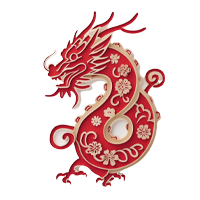
The Dragon is the most revered creature in Chinese culture. Unlike the Western dragon, which is feared and slain, the Chinese dragon (龙, lóng) is a symbol of power, luck, and imperial authority. Emperors used the dragon as their personal emblem. Dragon dances celebrate the Lunar New Year. Dragon boat races honor the poet Qu Yuan. The dragon represents the Yang force in nature: creative, active, and life-giving. Being born in the Year of the Dragon is considered extraordinarily fortunate.
The Shen Hour (7:00 AM - 9:00 AM (the Chen hour))
The Dragon governs the Chen hour (7:00 AM to 9:00 AM), the morning hour when the world comes fully alive with energy and purpose. This is the hour of maximum Yang energy, when ambitions are clearest and courage is highest. Dragon-born people often find that their most decisive and visionary moments come in the morning, when the day still feels full of possibility.
Years of the Dragon
Each year carries a different element. Click any year to explore that element variant.
Dragon in the Year of the Fire Horse
"Two fires together — magnificent if controlled, destructive if not."
Dragon and Horse share a trine bond, making this a year of natural momentum. The fire element doubles your already intense energy, creating a year where massive achievements are possible — but so is spectacular burnout. You'll attract attention, opportunities, and followers. The question isn't whether big things happen, but whether you can sustain them. Build systems and teams around your vision instead of trying to carry everything alone.
Your presence is magnetic this year, and people are drawn to your vision and energy. The risk is that you attract admirers but push away equals. Make room for people who challenge you, not just those who applaud. The strongest relationships this year are the ones where both sides grow.
This is a wealth-building year if you direct your energy strategically. Business ventures, investments, and career leaps all have strong momentum. The trap is ego spending — buying things to match your rising status rather than investing in your future. Keep your lifestyle one level below your income.
"My fire illuminates the path for others. I lead with vision and sustain with discipline."
Dragon FAQ
What years are the Year of the Dragon?
The Year of the Dragon falls on a 12-year cycle. Recent and upcoming years include: 1940, 1952, 1964, 1976, 1988, 2000, 2012, 2024.
What personality traits define the Dragon?
People born in the Year of the Dragon are commonly described as confident, ambitious, charismatic. The Charismatic Leader
Who is the Dragon most compatible with?
The Dragon is most compatible with the Rat, Monkey. Also compatible: Rooster.
Who is the Dragon least compatible with?
The Dragon tends to have more challenging dynamics with the Dog. These pairings require more conscious effort to thrive.
What element is the Dragon in Chinese astrology?
The Dragon's fixed element is Earth. However, each year also carries its own element (Wood, Fire, Earth, Metal, or Water), creating variations like the Earth Dragon or the Water Dragon.
What are the lucky and unlucky colors for the Dragon?
The Dragon's lucky colors are gold, silver, and grey. Unlucky colors include blue and green. Gold in particular resonates with the Dragon's imperial associations and natural magnetism.
Why is the Dragon year considered so lucky?
The Dragon is the most auspicious sign in Chinese culture, associated with imperial power, prosperity, and extraordinary achievement. Many families plan pregnancies to coincide with Dragon years, causing measurable birth rate increases.
What careers are best for people born in the Year of the Dragon?
Dragons excel as CEOs, entrepreneurs, politicians, architects, film directors, and any role requiring visionary leadership and personal magnetism. They thrive where big thinking and bold action are rewarded.
Why did the Dragon finish fifth in the Great Race?
Despite being able to fly, the Dragon stopped to help a drought-stricken village by creating rain, then paused to blow wind under a struggling Rabbit. This reveals the Dragon's true character: power used in service of others.
What health issues should Dragons watch out for?
Dragons are most vulnerable in their cardiovascular and adrenal systems. They push too hard, sleep too little, and rely on adrenaline. Scheduled rest and consistent sleep matter more than any supplement or diet.
The Dragon in Relationships
Friendship Style
Dragons are generous, protective, and genuinely fun friends. They plan the most memorable trips, throw the best parties, and show up with big energy when you need a boost. Their friendships feel exciting and significant. The catch is that Dragons expect loyalty and admiration in return, and friendships that feel one-sided will be quietly deprioritized.
Loyalty Pattern
Dragon loyalty is powerful but conditional. They are fiercely loyal to people who respect them and believe in their vision. But if they feel disrespected or overshadowed, the loyalty evaporates with surprising speed. Dragons do not hold grudges. They simply stop caring, which can be worse.
Family Dynamic
Dragons are ambitious, encouraging parents who want their children to be extraordinary. They set high expectations and provide grand opportunities. They can struggle with children who are naturally quiet or conventional, not because they are disappointed, but because they genuinely do not understand why anyone would choose an ordinary path when an extraordinary one is available.
Conflict Style
Dragons confront conflict with overwhelming force. They do not escalate gradually. They go from calm to volcanic with almost no warning, and when they are angry, they are genuinely intimidating. The conflict ends quickly because most people back down. The Dragon rarely realizes that winning an argument through intimidation is not the same as resolving the issue.